
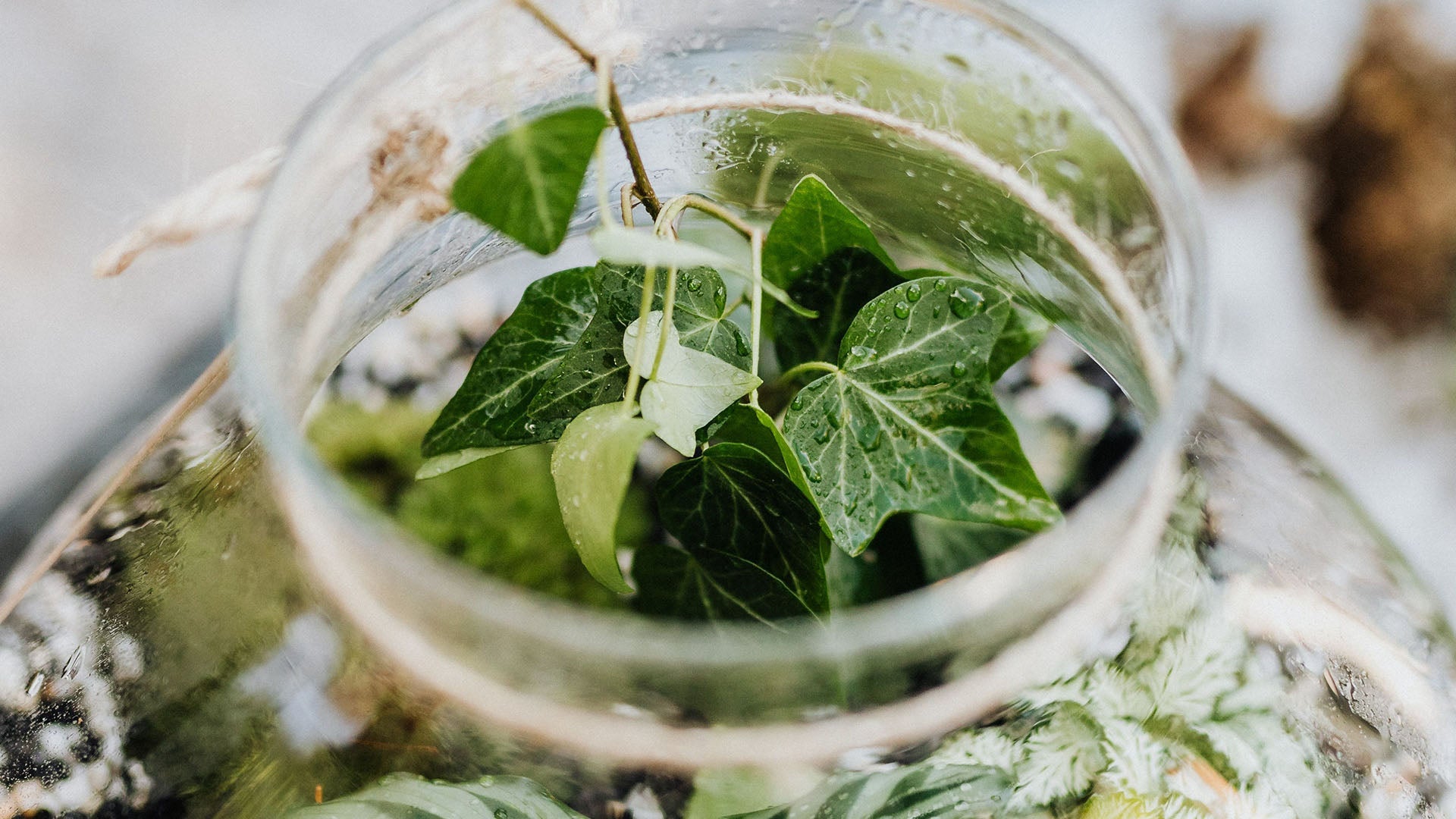
Building a terrarium is one of the most satisfying plant projects a beginner can take on. A well-built terrarium looks beautiful, requires surprisingly little maintenance, and brings a genuine sense of the natural world into even the smallest Toronto apartment or condo. The catch is that a terrarium is not simply a plant in a jar. It is a layered system, and getting that system right from the start is the difference between a thriving miniature ecosystem and a soggy, mouldy disappointment that puts you off plants for a month.
The good news is that you do not need many supplies. You need the right supplies, bought in the right order and layered correctly. This guide walks you through everything, from choosing your glass vessel to sourcing plants, moss, and substrate materials in Toronto, so you can build your first terrarium with confidence and have it lasting for years rather than weeks.
First, Decide: Closed or Open Terrarium?
Before buying a single supply, you need to make one fundamental decision that shapes everything else: are you building a closed terrarium or an open one? The answer determines which glass container you buy, which plants you choose, and how you build your substrate layers.
A closed terrarium has a lid or sealed opening that traps humidity inside and creates a self-sustaining water cycle. Moisture evaporates from the soil, condenses on the glass, and drips back down to water the plants again. Closed terrariums are ideal for tropical, moisture-loving plants and mosses. They require almost no watering once established and can thrive for years with minimal intervention. They are generally considered the more beginner-friendly option because the self-regulating environment is more forgiving of neglect.
An open terrarium has no lid and allows air to circulate freely. It suits dry-loving plants like succulents, cacti, and air plants that would rot in a humid, sealed environment. Open terrariums require occasional watering and a bit more attention, but they offer more flexibility in terms of vessel shape and are easier to access for pruning and rearranging.
As a general rule: if you want moss, ferns, or tropical foliage, go closed. If you want succulents, cacti, or air plants, go open.

The Complete Terrarium Supply List
1. A Glass Vessel
Your glass container is the foundation of the entire build. For a closed terrarium, you need a vessel with a lid or a narrow opening that traps humidity inside. Wide-mouth glass jars with lids, geometric glass terrariums with hinged openings, and large glass cloches all work well. For an open terrarium, the options are broader: open bowls, geometric frames, wide glass vases, and even large brandy glasses are all suitable.
A few things to look for when choosing your vessel. Clarity matters — the cleaner and clearer the glass, the better you can see your creation from outside. Size matters more than beginners expect. A vessel that is too small leaves no room for plant growth and makes layering difficult. For a first build, aim for something with an interior volume of at least two litres. Anything smaller than that becomes hard to work with and harder to keep balanced.
At ecostems, we carry a range of glass terrariums in Toronto for both closed and open builds, available for same-day delivery across the GTA or in-store pickup at our Corktown and Kensington Market locations.
2. Drainage Material
The drainage layer sits at the very bottom of your terrarium and is non-negotiable. Because glass vessels have no drainage holes, excess moisture needs somewhere to collect that is not directly against your plant roots. Without a drainage layer, water pools at the base of the substrate, roots stay waterlogged, and plants rot within weeks.
The most commonly used drainage materials are small pebbles or gravel, LECA (lightweight expanded clay aggregate), and lava rock. Any of these work well. Aim for a drainage layer of about two to three centimetres for smaller vessels and up to five centimetres for larger ones. The material should be clean and free of dust before you use it — rinse it thoroughly if you are unsure.
LECA has become a popular choice in recent years because it is lightweight, holds moisture evenly, and does not compact over time. It is widely available at garden centres and plant shops across Toronto.
3. Activated Charcoal
Activated charcoal is the supply that beginners most commonly skip, and it is almost always the reason their first terrarium fails within a month. In a closed terrarium, water recirculates continuously through the system. Without something to filter it, bacteria and mould accumulate in the drainage layer, producing odour, discolouration, and eventually killing the plants.
A thin layer of activated charcoal — horticultural grade, not the kind used for barbecues — placed on top of the drainage material filters the recirculating water and keeps the environment inside the terrarium clean and balanced. You do not need much. A centimetre or two is sufficient for most builds.
Activated charcoal is available at some garden centres and plant shops in Toronto. At ecostems, we stock it as part of our terrarium supplies collection alongside the other essentials listed here.
4. A Separation Layer (Optional but Recommended)
A thin layer of sphagnum moss or mesh fabric between the charcoal and the soil layer prevents soil from sifting down into the drainage material over time. As you water your terrarium or as condensation moves through it, fine soil particles migrate downward and eventually clog the drainage layer if there is nothing stopping them.
This is an optional step that many builds skip without immediate consequences, but for a long-lasting terrarium it is worth including. A handful of long-fibre sphagnum moss laid flat over the charcoal layer is the simplest and most effective solution.
5. Terrarium Substrate
Standard potting soil is not suitable for terrariums. It is formulated for pots with drainage holes, tends to compact over time in an enclosed environment, and retains too much moisture for most closed terrarium plants. A dedicated terrarium substrate is looser, more porous, and designed to hold the right balance of moisture without becoming waterlogged.
For closed terrariums with tropical plants and mosses, look for a substrate with a mix of peat or coco coir, perlite or pumice for drainage, and some organic matter. For open terrariums with succulents or cacti, a gritty, fast-draining cactus and succulent mix works best.
Aim for a substrate layer deep enough to accommodate your plant roots — typically five to eight centimetres for smaller plants and up to fifteen centimetres for larger builds. This is the most important layer in the entire build, and it is worth buying quality material rather than improvising with whatever soil you have on hand.
6. Plants
Plant selection is where most beginners either get it very right or very wrong. The most common mistake is choosing plants based on appearance alone without checking whether they are suitable for the terrarium environment you are building.
For closed terrariums, you want compact, humidity-loving tropical plants that stay small and grow slowly. Good choices for beginners include fittonia (nerve plant), peperomia varieties, baby ferns, miniature ficus, and pileas. These are all available at ecostems as part of our indoor plant collection and can be delivered across Toronto and the GTA.
For open terrariums, drought-tolerant plants are essential. Echeveria, haworthia, small cacti, and air plants (tillandsia) are all excellent choices. Succulents and cacti available at ecostems' Toronto locations are well-suited to open terrarium builds and are sourced to thrive in indoor conditions year-round.
A critical rule for any first terrarium: do not overplant. Three to five small plants maximum in a standard-sized vessel. Plants need room to grow and the environment needs space to breathe. An overcrowded terrarium looks impressive for about two weeks before it becomes a tangled, suffocating mess.
7. Moss
Moss is not just decorative — in a closed terrarium it serves a genuine functional role. It helps regulate moisture levels, stabilises the surface of the substrate, and acts as a visual indicator of the terrarium's overall health. If the moss looks vibrant and green, the environment is balanced. If it starts to brown or dry out, something needs adjusting.
Sheet moss is the most commonly used variety for closed terrarium builds and is available at ecostems as part of our terrarium supplies range. It lays flat over the substrate surface, fills gaps between plants naturally, and creates the lush forest-floor aesthetic that makes a closed terrarium so visually appealing.
For open terrariums, moss is optional. Some builders include a small patch for visual contrast, while others prefer the clean, minimalist look of substrate and stone alone.
8. Tools
The most underestimated item on any terrarium supply list is a set of long-handled planting tools. For vessels with small openings, your hands simply cannot reach in to place plants, adjust roots, or smooth the substrate surface. Long tweezers or forceps and a narrow trowel or spoon make the difference between a precise, well-planted build and a frustrating hour of trying to guide a plant through a five-centimetre opening with your fingers.
For wide-mouthed vessels, standard small gardening tools work fine. For geometric terrariums, cloches, and any vessel with a narrow neck, a dedicated set of terrarium planting tools is worth every dollar.
9. Decorative Accents (Optional)
Stones, driftwood, small crystals, miniature figurines, and decorative sand are all popular additions to terrarium builds and can add significant visual character without affecting the plant environment. These are entirely optional and should be added last, once the plants and moss are in place, so you can see how much space remains and where accents will have the most impact.
At ecostems, our terrarium supplies collection includes a range of decorative materials suited to both closed and open builds.
The Layering Order — Getting It Right
The order in which you build your layers is as important as the supplies themselves. For a closed terrarium, the correct sequence from bottom to top is: drainage material, activated charcoal, separation layer (optional), substrate, plants, moss, decorative accents.
For an open terrarium with succulents or cacti, simplify to: drainage material, cactus and succulent substrate, plants, decorative stone or sand.
Take your time with each layer. Compact the drainage material gently before adding the charcoal. Smooth the substrate surface before planting. Position your plants before adding moss so you can adjust them freely. Add moss last, pressing it gently against the substrate around plant bases.
The whole build takes between 45 minutes and an hour and a half depending on vessel size and complexity. Do not rush the planting step — small adjustments made before the moss goes in are far easier than trying to fix things afterward.

Where to Buy Terrarium Supplies in Toronto
Knowing what you need is half the challenge. The other half is finding quality supplies locally in Toronto rather than ordering components individually online and waiting for shipping.
At ecostems, we stock everything on this list in-store and online, available for same-day delivery across Toronto and the GTA for orders placed before 11am, Monday to Saturday. Our terrarium supplies collection includes glass vessels, substrate, activated charcoal, sheet moss, decorative accents, and a range of terrarium-suitable plants sourced from local and fair-trade growers.
You can visit us in person at either of our two Toronto locations — in Corktown at 364 King Street East, or in Kensington Market at 160 Baldwin Street — where our team can help you select the right supplies for the specific terrarium you have in mind and answer any questions about layering, plant choice, and ongoing care.
If you would rather learn by doing, our terrarium workshops in Toronto are a popular alternative to sourcing supplies independently. All materials are provided, our team guides you through every step of the build, and you leave with a finished terrarium ready to take home. Workshop sessions are available for individuals, couples, groups, and corporate events.
After the Build: Basic Terrarium Care
Once your terrarium is built and sealed, the most important thing you can do is leave it alone for the first few weeks. A newly built closed terrarium needs time to establish its internal water cycle before you start adjusting moisture levels. Place it in bright, indirect light and resist the urge to open it every day.
Signs of a well-balanced closed terrarium include condensation on the glass during the day that clears by morning, vibrant moss colour, and steady plant growth. If condensation covers the entire glass consistently throughout the day without clearing, open the lid briefly to release some moisture.
For open terrariums, water lightly every one to two weeks depending on the plants. Succulents and cacti prefer to dry out completely between waterings. If in doubt, wait another week.
Both open and closed terrariums do best in bright, indirect natural light. Direct sunlight through glass creates a greenhouse effect that can overheat and damage plants, particularly in a sealed environment.
Skip the Shopping List: Book a Terrarium Workshop Instead
If sourcing supplies individually feels overwhelming, a terrarium workshop at ecostems is the simplest way to get started. We provide everything — the glass vessel, all substrate layers, plants, moss, tools, and decorative accents — in a guided session that takes about 90 minutes. You build your own terrarium from scratch with hands-on support from our team, and you take it home at the end of the session.
Workshop sessions make excellent gifts for plant lovers, creative couples, and anyone who wants a hands-on experience rather than a product. Corporate group sessions are also available for team events and holiday parties.
Visit our website to browse upcoming workshop dates and book your place.
Frequently Asked Questions
How much does it cost to build a terrarium from scratch in Toronto? A basic closed terrarium build using a mid-sized glass vessel, substrate layers, moss, and three small plants typically costs between $60 and $120 depending on the size of the vessel and the plants you choose. Starting with a quality glass terrarium and good substrate is worth the investment — cheap alternatives tend to produce unstable environments that fail within a month.
Can I use any glass container for a terrarium? You can use most clean glass containers, but the best results come from purpose-built glass terrariums with clear, thick glass that allows good light transmission and does not distort the view of your plants. Wide-mouth jars and vessels with removable lids are the most practical for beginners because they are easier to plant and maintain.
How long does a terrarium last? A well-built closed terrarium with the correct layering system and appropriate plants can last for years. Some closed terrariums thrive for decades with minimal intervention. The most common reasons terrariums fail early are incorrect substrate, no charcoal layer, overplanting, and too much direct sunlight.
What are the easiest plants for a first terrarium in Toronto? For closed terrariums, fittonia, peperomia, and baby ferns are the most forgiving choices for beginners. For open terrariums, echeveria, haworthia, and small cacti are reliably easy. All of these are available at ecostems in Toronto.
Do I need special tools to build a terrarium? For wide-mouthed vessels, standard small gardening tools work fine. For narrow-necked containers, a set of long-handled terrarium tweezers and a narrow trowel makes a significant practical difference. We stock terrarium tools at ecostems alongside our other supplies.
